


 HOME
HOME
A 100-Year Aspiration: Creating a Sustainable Future
At JTB, Japan's largest travel agency, a major organizational transformation is underway to redefine tourism and all forms of exchange as a means of building a sustainable society. This shift goes beyond innovation, representing a return to their original corporate philosophy:
“We strive to foster peace and global interconnectedness by creating opportunities for meaningful human interactions.”
This article explores the legacy JTB created, its current sustainability-centered strategic goals, and how this connects to the highly-sought after education offered in APU’s College of Sustainability and Tourism (ST). Comments from Mr. Hosono, head of the Sustainability Team at JTB Corp. Headquarters, and Mr. Omori, the manager in charge, offer deeper insights into these topics.
*Titles are current as of February 2026.
 Table of Contents
- 1.The Enduring DNA of JTB: Growing Alongside Local Communities
- 2.Organizational Transformation: Committing to Sustainability
- 3.Co-Creation In Action: SICS Sustainable Lounge
- 4.Gain Practical Skills: How ST’s Fieldwork Connects to Real-World Impact
- 5.Conclusion: To the Next Generation of Changemakers
1. The Enduring DNA of JTB: Growing Alongside Local Communities

JTB's history dates back to 1912. The company began under the banners of promoting international goodwill by attracting overseas visitors and economic development through foreign currency acquisition. Tourism was not merely entertainment; it served as a highly public enterprise and as national policy, designed to pave the way for the future of the country as well as local regions.
Over the years, JTB’s spirit of growing alongside local communities has evolved into today’s business model of creating meaningful human interactions. In other words, JTB does more than arrange travel, it aims to solve regional development issues and generate new value through exchange between people, goods, and information.
Mr. Hosono, who spearheads sustainability initiatives at JTB, defines the company's vision of sustainable tourism as:
JTB is currently advancing sustainable tourism initiatives in accordance with the international standards of the Global Sustainable Tourism Council® (GSTC). Their historical aspiration has now been codified into a global standard, serving as a core pillar of their strategic business operations.
2. Organizational Transformation: Committing to Sustainability
What transforms corporate philosophy into real value is the action of each individual employee. Through strong initiatives and training, JTB is encouraging employees at branch offices nationwide to make their own commitments to sustainability.
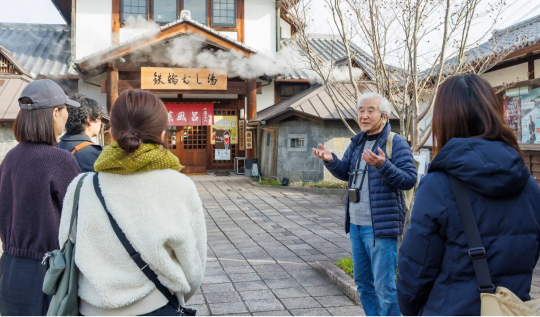
An example of this is the introduction of tourism development producers, a role that goes beyond the traditional framework of a sales representative. These employees are required to discover new regional resources and attractions, engage with diverse stakeholders such as government organizations, local residents, and private companies, as well as design sustainable regional management models.
Ms. Omori expresses her expectations regarding this internal mindset shift and the qualities required of future talent:

Sustainability is no longer something considered only by a specific department. It is now a standard core value that all employees are expected to incorporate into their daily work. In particular, the younger generation can acutely sense social issues and think of new ways to solve them. What we value is the ability to stand eye-to-eye with local people and work on their challenges as one’s own. (Ms. Omori)
An initiative that symbolizes committing to sustainability is the Kusemonozu Project. By transforming underutilized fish from the Seto Inland Sea into popular local dishes, JTB employees worked directly on a regional problem to create a new sustainable economic cycle.
3. Co-Creation In Action: SICS Sustainable Lounge
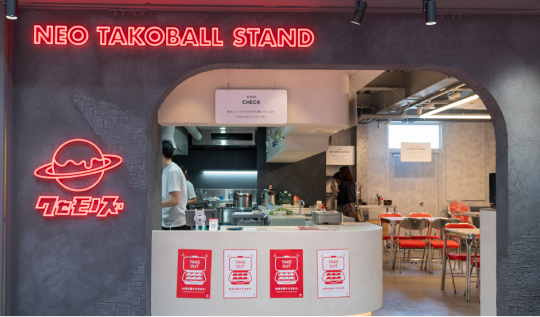
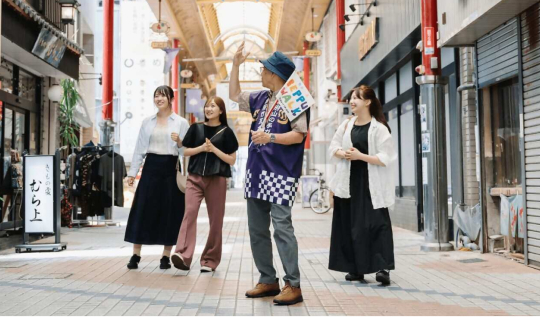
JTB's sustainability management extends beyond pre-trip and in-trip product development to improving host-readiness and visitor frameworks in local communities. A notable example is the SICS (Setouchi Islands Concierge Service) Sustainable Lounge, a tourism exchange hub opened inside the Takamatsu City Central Wholesale Market on Shikoku Island.
This revitalized space utilizes scrap materials from the market and serves as a place of collaboration for local residents, travelers, and creators. JTB employees act as concierges, allowing visitors to deeply experience the charm of everyday local life while reliably returning tourism revenue to the region.
Mr. Hosono emphasizes this importance of giving back:

There is no point if a region is exhausted by tourism. Our mission is to prevent overtourism, protect local culture and livelihoods, and create a system where the residents can truly feel, 'We are glad the tourists came. (Mr. Hosono)
This down-to-earth yet genuine community initiative is the proof of trust JTB has built over a century, and it remains a strength unmatched by competitors.
- 【 In cooperation with 】
- JTB Corp.
- 【 Interviewer 】
-
Hitoshi Miwa
Senior Admissions Counselor,
Admissions Office (International), Ritsumeikan Asia Pacific University
(Based on an interview conducted on February, 2026.)









 Watch the Video






Sustainable tourism is not just about protecting the environment. It refers to a state where local culture, the economy, and the environment are all passed down to future generations, bringing happiness to both travelers and the local community. We must act as coordinators who unearth the intrinsic value of a region and present it to the world in a sustainable manner. (Mr. Hosono)