CAREERS & PATHWAYS | APU Ritsumeikan Asia Pacific University

CAREER PATH FOR ST

From ST where you can become an academic practioner, we have interviewed 3 key persons from a professional field in sustainability and tourism.
Explore what our society is seeking from ST and learn what you can do in the future after studying through ST.

Tap the buttons below to find the information you need.

A 100-Year Aspiration: Creating a Sustainable Future

At JTB, Japan's largest travel agency, a major organizational transformation is underway to redefine tourism and all forms of exchange as a means of building a sustainable society. This shift goes beyond innovation, representing a return to their original corporate philosophy:

“We strive to foster peace and global interconnectedness by creating opportunities for meaningful human interactions.”

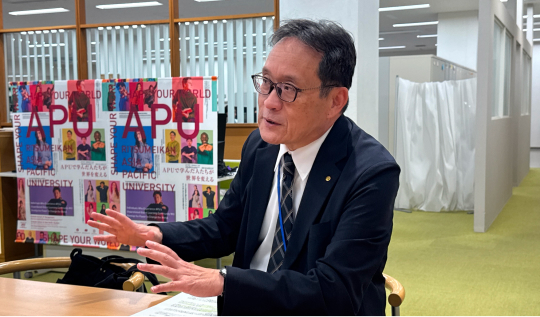
This article explores the legacy JTB created, its current sustainability-centered strategic goals, and how this connects to the highly-sought after education offered in APU’s College of Sustainability and Tourism (ST). Comments from Mr. Hosono, head of the Sustainability Team at JTB Corp. Headquarters, and Mr. Omori, the manager in charge, offer deeper insights into these topics.

*Titles are current as of February 2026.

1. The Enduring DNA of JTB: Growing Alongside Local Communities

JTB's history dates back to 1912. The company began under the banners of promoting international goodwill by attracting overseas visitors and economic development through foreign currency acquisition. Tourism was not merely entertainment; it served as a highly public enterprise and as national policy, designed to pave the way for the future of the country as well as local regions.
Over the years, JTB’s spirit of growing alongside local communities has evolved into today’s business model of creating meaningful human interactions. In other words, JTB does more than arrange travel, it aims to solve regional development issues and generate new value through exchange between people, goods, and information.
Mr. Hosono, who spearheads sustainability initiatives at JTB, defines the company's vision of sustainable tourism as:

Sustainable tourism is not just about protecting the environment. It refers to a state where local culture, the economy, and the environment are all passed down to future generations, bringing happiness to both travelers and the local community. We must act as coordinators who unearth the intrinsic value of a region and present it to the world in a sustainable manner. (Mr. Hosono)

JTB is currently advancing sustainable tourism initiatives in accordance with the international standards of the Global Sustainable Tourism Council® (GSTC). Their historical aspiration has now been codified into a global standard, serving as a core pillar of their strategic business operations.

2. Organizational Transformation: Committing to Sustainability

What transforms corporate philosophy into real value is the action of each individual employee. Through strong initiatives and training, JTB is encouraging employees at branch offices nationwide to make their own commitments to sustainability.
An example of this is the introduction of tourism development producers, a role that goes beyond the traditional framework of a sales representative. These employees are required to discover new regional resources and attractions, engage with diverse stakeholders such as government organizations, local residents, and private companies, as well as design sustainable regional management models.
Ms. Omori expresses her expectations regarding this internal mindset shift and the qualities required of future talent:
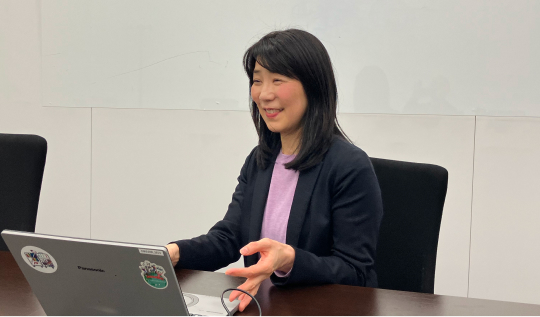
Sustainability is no longer something considered only by a specific department. It is now a standard core value that all employees are expected to incorporate into their daily work. In particular, the younger generation can acutely sense social issues and think of new ways to solve them. What we value is the ability to stand eye-to-eye with local people and work on their challenges as one’s own. (Ms. Omori)

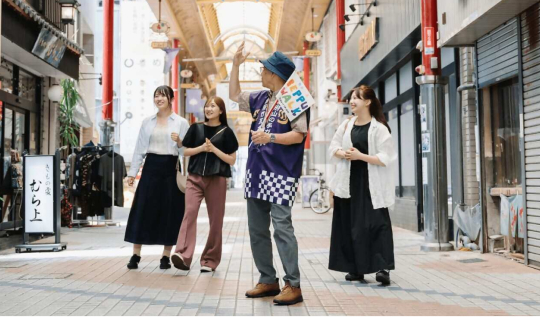
An initiative that symbolizes committing to sustainability is the Kusemonozu Project. By transforming underutilized fish from the Seto Inland Sea into popular local dishes, JTB employees worked directly on a regional problem to create a new sustainable economic cycle.

3. Co-Creation In Action: SICS Sustainable Lounge
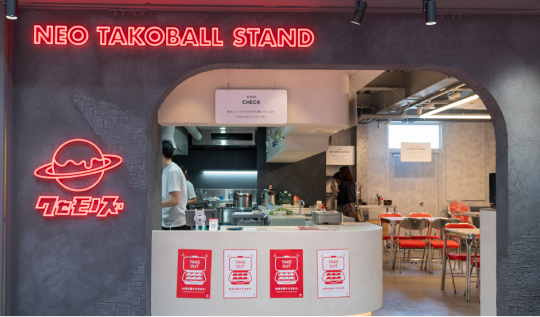
JTB's sustainability management extends beyond pre-trip and in-trip product development to improving host-readiness and visitor frameworks in local communities. A notable example is the SICS (Setouchi Islands Concierge Service) Sustainable Lounge, a tourism exchange hub opened inside the Takamatsu City Central Wholesale Market on Shikoku Island.
This revitalized space utilizes scrap materials from the market and serves as a place of collaboration for local residents, travelers, and creators. JTB employees act as concierges, allowing visitors to deeply experience the charm of everyday local life while reliably returning tourism revenue to the region.
Mr. Hosono emphasizes this importance of giving back:
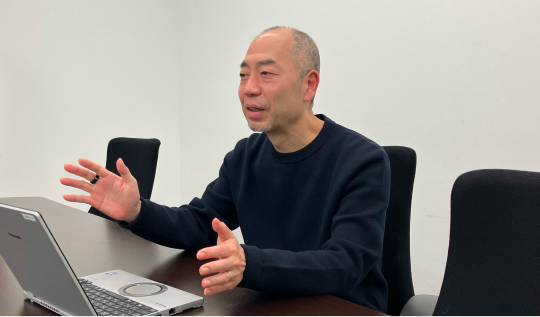
There is no point if a region is exhausted by tourism. Our mission is to prevent overtourism, protect local culture and livelihoods, and create a system where the residents can truly feel, 'We are glad the tourists came. (Mr. Hosono)

This down-to-earth yet genuine community initiative is the proof of trust JTB has built over a century, and it remains a strength unmatched by competitors.

4. Gaining Practical Skills: How ST’s Fieldwork Connects to Real-World Impact

JTB is currently executing a highly-advanced mission on the ground: incorporating sustainability into society. To meet this challenge, APU’s ST students are honing their practical skills through fieldwork.
In APU's education, fieldwork is more than observation. Students visit tourism sites domestically and internationally in order to tackle real-world challenges where standard academic theories do not always apply.

  • Leveraging the Power of Diversity with Consensus-Building Skills:

    As Mr. Hosono mentions, ensuring a region’s happiness requires listening directly to residents. For ST students, their diverse backgrounds enhance their ability to identify new regional value often overlooked in conventional tourism development, especially when combined with their fieldwork experiences of being immersed in local life and engaging in ongoing dialogue.

  • Solving Problems with Prototyping:

    Innovative initiatives like JTB’s Kusemonozu Project require perseverance through continuous trial and error. Through ST's fieldwork, students propose and test solutions to the issues they uncover on-site. They are trained to not let ideas end as theories, and this is precisely what turns them into immediate assets in the professional world.

  • Localizing International Standards with Critical Thinking:

    The ability to solve societal issues is refined through translating international standards, like those of the GSTC, into a format appropriate for local communities in regional Japan. Through ST’s fieldwork, students acquire the critical thinking skills necessary for this, as they learn to bridge the gap between theory and reality.

5. Conclusion: To the Next Generation of Changemakers

At JTB, professionals like Mr. Hosono and Mr. Omori firmly believe in the power of tourism and pioneering for the future of local regions, and are taking on new challenges every day. With JTB seriously pursuing sustainability from the inside out, they need young leaders who value dialogue with people in communities, can grasp the true essence of problems, and take decisive action. Graduates of the College of Sustainability and Tourism, trained through immersive fieldwork and specialized knowledge, will undoubtedly become bright beacons of hope, illuminating the future for Japan's local regions.

【 In cooperation with 】
JTB Corp.
【 Interviewer 】
Hitoshi Miwa

Senior Admissions Counselor,
Admissions Office (International), Ritsumeikan Asia Pacific University

(Based on an interview conducted on February, 2026.)

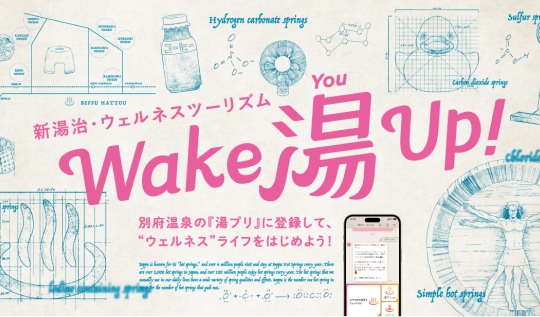
Rebranding a Local Resource: Onsen with Wellness

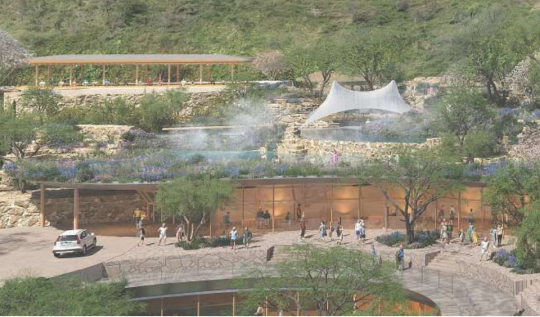
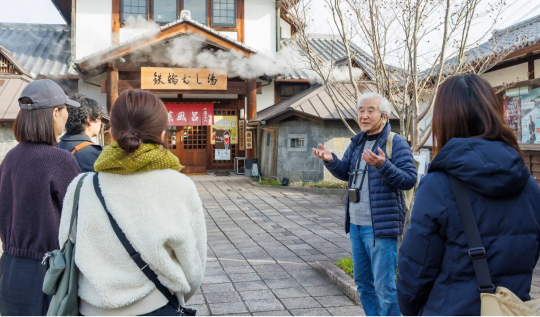
Beppu City in Oita Prefecture is a premier hot spring (onsen) destination, boasting one of the highest yields of natural spring water in Japan. Today, the city is undergoing a major transformation, moving beyond its traditional framework as a mere tourist destination. Spearheading this initiative is the Hot Spring Therapeutics and Wellness Promotion Office at Beppu City Hall.
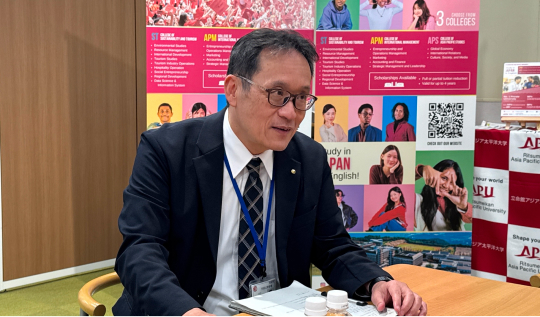
An interview with Mr. Wada, the director of the promotion office, revealed an ambitious vision transcending conventional administrative boundaries: redefining the value of onsen culture by integrating diverse scientific perspectives while preserving its deep-rooted traditions. At the same time, the interview brought into sharp focus the type of talent urgently needed on the ground to realize this vision.

1. From Bathing to Health: The Essence of Beppu City’s Hot Spring Therapeutics and Wellness Initiative

With global awareness of wellness on the rise, a massive economic sphere known as "the wellness industry" has emerged. The hot spring therapeutics concept championed by Beppu City is not simply about soaking in a hot spring to relax. It is an endeavor to quantify the mineral compositions and health benefits of hot springs based on scientific evidence, restructuring the experience into a comprehensive health program that integrates diet, exercise, sleep, and interaction with the local community.

Furthermore, insights from the interview suggest this initiative goes beyond offering a program for health benefits, as it aims to add significant value to the hot spring culture that is part of ordinary life for local residents, elevating it into a refined regional culture. This is the blueprint for a next-generation onsen city.
Mr. Wada describes the intriguing nature of the Hot Spring Therapeutics and Wellness Initiative :

We are investigating the effects of hot springs from various angles. In collaboration with local university research institutions, we are proposing new ways to enjoy hot springs by presenting various facts—such as their impact on the intestinal environment and skin, or the differences in jigoku mushi (hot-spring-steamed) cuisine depending on the spring quality. While wellness through hot springs is a culture widely seen in Europe, the sheer scale of Beppu as a hot spring town is far larger than those regions. Promoting wellness tourism in a hot spring town of this magnitude is a tremendous strength.

The driving force behind this shift is to find a way to overcome the limitations of the “one-night, two-day consumption-oriented tourism" that is common to Japan. Although Beppu is a famous tourist destination, its average length of stay is remarkably short at 1.09 days, presenting a challenge for economic expansion. Furthermore, amidst population decline and diversification of what travelers consider important, shifting to a "longer-stay, contribution-focused” type of tourism is essential for regional sustainability by providing added value through a longer visit to the area.
As a breakthrough solution, Beppu City is now driving a rebranding of its resources, elevating hot springs from a resource for enjoyment to a regional industry that promotes wellness of physical and mental health.

2. Administrative Leadership in the Social Implementation of Resources

Why is it necessary to introduce a scientific approach to a highly traditional hot spring culture now? Mr. Wada explains the true intent:

Toji (hot spring therapeutics) culture has been deeply rooted in Beppu since ancient times, but until now, it has remained a somewhat intuitive understanding that 'soaking in hot springs is somehow good for you.' But Beppu's true strength lies in its unparalleled diversity of spring types. If we can present the specific benefits of each type of spring water as data, visitors seeking specific wellness effects will be able to actively choose the optimal hot spring tailored to their physical condition and goals.

Academic research on hot springs has been conducted for many years. However, much of it has remained confined within research institutions, failing to achieve a wider social implementation connected to commonly available services or everyday bathing experiences. To address this, Beppu City is establishing a framework where the city government acts as a coordinator, drawing the research findings out into the real world and returning them to residents and tourists as new wellness experiences.
Furthermore, these experiences that Beppu City envision will not be a limited privilege for a select few. As a city that has historically welcomed outsiders with open arms, Beppu continues to be a pioneer toward the creation of an "inclusive society," where diverse individuals, including foreign residents and people with disabilities, can coexist.
Engaging and collaborating with people from diverse backgrounds as regional stakeholders is absolutely necessary for future regional management. As a government body, Beppu has a responsibility to promote this project from a fair and impartial position, ensuring it holds value for all citizens without bias toward specific interests. Therefore, transforming it into a sustainable initiative, rather than a one-time business success, is vital.

Rebranding spring water into a new regional culture and value through the power of science and inclusivity is a highly complex mission. Accomplishing this demands flexible, advanced coordination skills on the ground that transcend traditional administrative boundaries.

3. The Talent Needed for the Future

In the face of this grand vision, relying solely on existing frameworks of the tourism industry and government has its limits. Based on the interview, the region currently requires talent that possess a combination of the following three skills:

  • Facilitation Skills to Connect Diverse Industries:

    To make hot spring therapeutics a reality, people who speak entirely different professional languages, such as hotel management, physicians, health equipment manufacturers, IT engineers, and government officials, must collaborate to create a structure that generates economic impact. Specialized professionals who can facilitate such cross-sector projects are highly sought after.

  • Data-Driven Planning and Marketing Skills:

    Conventional tourism often relies on experience and intuition. In wellness tourism, however, those who can utilize data—such as how much one’s blood pressure improved during a stay or determining if a type of spring water is effective in preventative care for a specific demographic—are crucial. The marketing prowess to decipher objective numbers and translate them into customer value is also essential.

  • Deep Insight into Sustainability:

    Hot springs are regional resources, but they are not infinite. Furthermore, if an influx of tourists becomes a burden on local residents, it will defeat the purpose of this initiative. Minimizing environmental impact, respecting local culture, and simultaneously stimulating the economy, a perspective capable of designing sustainability not as a mere buzzword but as a prerequisite for business, is necessary.

In recent years, the importance of STEM talent with data science and technical skills has been heavily emphasized. However, it is individuals with skills cultivated in the humanities and social sciences, such as the ability to articulate complex ideas and strong interpersonal skills, who successfully lead social impact projects to fruition.

In other words, no matter how precise scientific evidence may be, if it cannot be translated into words that resonate with people and build consensus on the ground, a project will lose its substance. This is not a binary issue of superiority between STEM and humanities but rather highlights how both are indispensable in bridging different specializations together to achieve a single vision. Particularly in regional challenges where diverse values intersect, such as Beppu City's Hot Springs Therapeutics and Wellness Initiative, interpersonal skills are the ultimate key to transforming theory into real-world enthusiasm.

4. Beppu's Future Moves Toward "Co-Creation"

The future envisioned by Beppu City’s Hot Springs Therapeutics and Wellness Promotion Office is highly detailed and incredibly ambitious. However, there is still a shortage of talent needed to serve as the engine to set this vision in motion.
Here, the strength of APU’s College of Sustainability and Tourism (ST) lies not merely in its local presence, but in its very structure as learning is directly connected to solving Beppu's challenges.

  • Prototype for Coexistence and Coordination Cultivated in a Multicultural Environment:

    Thanks to APU’s global student body, daily life on campus is a continuous series of learning to coordinate across different cultures and academic fields. For students who spend four years repeatedly engaging in the process of consensus-building with others from different backgrounds, connecting a region's various stakeholders is simply an extension of their everyday lives.

  • Uniqueness of Systematically Studying "Tourism x Sustainability":

    While many tourism programs focus primarily on hospitality and customer acquisition, APU's ST program places sustainability at the core of its academic discipline. Environmental conservation, regional economic independence, and the preservation of culture: the critical thinking gained as an ST student to expertly combine these three elements is the very essence of the sustainable community development that Beppu City aims to realize through the hot springs wellness initiative.

With a global-standard perspective on sustainability, the experience of connecting diverse people, and ability to create value based on evidence, ST students applying their specialized knowledge on the ground in Beppu is goes beyond typical student community service. It can be argued that they are an essential piece of the puzzle, both logically and practically, for the city of Beppu to evolve into the world’s top wellness city.

【 In cooperation with 】
Beppu City Hall
【 Interviewer 】
Hitoshi Miwa

Senior Admissions Counselor,
Admissions Office (International), Ritsumeikan Asia Pacific University

(Based on an interview conducted on March, 2026.)

Protecting for the People: Aso-Kuju National Park's Approach to Coexistence and Partnership

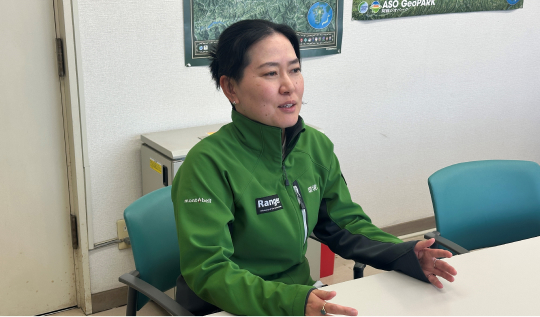
  • 【Speaker】 Aya Kasahara

    Superintendent, Aso-Kuju National Park Office, Ministry of the Environment

  • 【Interviewer】 Hitoshi Miwa

    Senior Admissions Counselor, Ritsumeikan Asia Pacific University (APU)

1. National Parks: More Than Just Protecting Nature

Thank you for taking the time to speak with us today. As APU is based in Beppu, Aso-Kuju National Park is a very familiar destination for student fieldwork and tourism. To start off, could you tell us about the role of your office and your approach to managing such a vast area?

If I were to describe our work in a single phrase, it would be encouraging people to experience the national park firsthand while conserving its natural environment and landscapes.
Under the Natural Parks Act, we administer the park as a national government agency, working to balance conservation with appropriate public use across a wide area that includes both public and private land.

One of our daily tasks is handling permit applications and approvals within the park. For example, when someone proposes construction or other activities that may affect the landscape, we carefully review the details and grant permits where appropriate, often with conditions, to ensure they are compatible with the park’s natural environment.
While much of this work involves reviewing documents, we also frequently conduct site visits to understand the actual conditions on the ground. Another key part of our work is supporting the maintenance of mountain trails, signage, and visitor facilities, in cooperation with local governments and other stakeholders, so that visitors can safely enjoy the park.

However, what we value most goes beyond administrative procedures. We are constantly challenged to balance two sometimes competing goals: conserving nature and enabling people to experience it. Our essential mission is to find a practical and sustainable balance by working closely with local communities and engaging directly on the ground.

2. A Thousand Years of Coexistence: Comparing Japanese and U.S. National Parks

In the context of nature conservation, examples like Yellowstone in the U.S. are often cited. How does the management style of Japanese national parks, particularly here in Aso-Kuju, differ from that in the West?

That perspective is essential for understanding Japanese national parks. In countries with vast land areas such as the United States, many national parks are largely composed of publicly owned land, and management tends to focus on setting aside and protecting extensive natural areas.
In contrast, Japanese national parks adopt a zoning system that designates areas of outstanding natural value regardless of land ownership boundaries. As a result, many private lands are included within the parks, where local residents’ livelihoods and communities have existed for generations. A key feature of this model is the involvement of diverse stakeholders, including local governments.
This framework—where land ownership and park administration are separate—creates both challenges and unique opportunities. Progress cannot be achieved simply through top-down regulation; instead, we need to visit sites, engage directly with farmers and business owners, and build mutual understanding through continuous dialogue.
While national park management in countries like the United States often places a strong emphasis on protecting large natural areas, management in Japan places additional emphasis on managing the relationships between nature and people, and among the people themselves. These steady, collaborative efforts are essential to the effective management of Japan’s national parks.

Differences in National Park Management Between Japan and the U.S.

Category Japan (Aso-Kuju, etc.) U.S. (Yellowstone, etc.)
Management Style Zoning system System centered on publicly owned land
Land Ownership Mix of public and private lands Predominantly publicly owned land
Management Focus Balancing conservation and public use Strong emphasis on protecting natural areas
Purpose of Protection Conservation of outstanding natural landscapes Protection of natural conditions and ecosystems
Partnerships Co-creation with local communities, companies, and universities Primarily government-led management

I see, so it’s because of this "zonal system" that the relationship between people and nature is so close. In your view, what makes the Aso-Kuju landscape uniquely valuable?

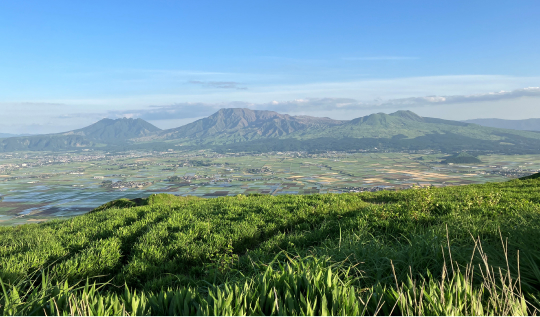
The most defining characteristic of Aso-Kuju National Park is the coexistence of volcanoes and human activity. The world-class caldera and the vast grasslands surrounding it may appear to be "untouched nature" at first glance. However, in reality, these grasslands have been maintained for centuries through agricultural and livestock practices such as grazing and controlled burning (noyaki).
Without continued human management, the grasslands would quickly transition into shrubland and eventually revert to forest. As a result, the unique flora and fauna that depend on grassland ecosystems would be lost. In other words, this landscape is not shaped by nature alone; it is a form of "secondary nature" created through long-term human involvement.
Compared to approaches often seen in countries such as the United States, where strong emphasis is placed on protecting large natural areas, Aso-Kuju National Park focuses on how to pass down a landscape shaped through the interaction between people and nature to future generations. We believe this ongoing cycle is what gives Aso-Kuju’s cultural landscape its core value and global significance.

3. Protecting “Coexistence”: Refining Value and Deepening Inspiration

The phrase "nature conservation" often conjures an image of keeping people away, but from your words, I sense a strong passion to actively encourage people to experience it."

Exactly. Our work is not about simply restricting access to nature. Rather, we protect and care for it so that it is maintained in the best possible condition, allowing as many people as possible to be inspired by the landscapes of Aso-Kuju National Park.
Properly protecting nature means bringing out the full value and appeal of each place. For example, continuing controlled burns (noyaki) to maintain the grasslands not only supports the livelihoods of local communities, but also allows visitors to experience the strong sense of openness and beauty unique to Aso-Kuju. Maintaining mountain trails plays a similar role—it enables visitors to safely enjoy the best views while minimizing impacts on the ecosystem.

When nature is protected through the collective efforts of local communities over many years, it creates a sense of genuine inspiration. Those who experience it often feel, "I want to cherish this place." That feeling, in turn, supports future conservation efforts. Our goal is to create this kind of positive cycle, in which people develop a deeper connection with nature through its protection.

I often hear how difficult it is for an outsider to step in and help guide a region where so many diverse viewpoints coexist. How do you actually implement solutions here in Aso-Kuju National Park?

Each region has its own unique history, traditions, and culture, and our first priority is to understand and respect that background. We also try not to see ourselves simply as “the administration,” but rather to become part of the community and build genuine relationships.
By spending time on the ground and engaging with local residents in their daily lives, we are able to develop a deeper understanding of the local society and economy. This allows us to develop and carry out initiatives that align with real conditions on the ground. It is a slow and steady process, but by building trust through these close, grassroots connections, we are gradually gaining the cooperation of local communities. It may seem indirect, but we believe this approach is essential.

4. The Challenges and Rewards of the Job

You mentioned that consensus building to unite people with different perspectives is the very core of your work. Could you share some of the difficulties you face, and conversely, the moments when you feel glad to do this job?

The greatest challenge is that there is no single right answer we can point to. Take controlled burning (noyaki), which is essential for maintaining the grasslands, for example. As agricultural practices change and local populations age, it is reaching the limits of what local communities can sustain. How should we involve outside volunteers? How can we develop new tourism-based approaches to support these efforts? Working through these challenges together with local residents—who are balancing the desire to preserve tradition with the reality that change is necessary—is not easy at all.
At the same time, this is what makes the work so meaningful. It happens when, after many rounds of discussion, local people say, “If that’s the case, let’s try it together.” And when, through these joint efforts, I see fresh green shoots emerging in spring from land that has been blackened by controlled burning, I feel a deep sense that our work is helping to carry this landscape into the future. Seeing that vitality and beauty, I truly feel that this is the most rewarding part of my work.

5. The Key to Co-Creation: The National Park Official Partner Program

In the face of challenges such as the lack of local successors and the need for long-term sustainability, the "National Park Official Partner Program” has been increasingly emphasized in recent years. Given that APU is also an Official Partner, what are your thoughts on the roles that these partners—including companies and universities—should play?

The future management of national parks will increasingly depend on collaboration among three key groups: government, local communities, and official partners who bring expertise from various fields.
Currently, the Ministry of the Environment is promoting the National Park Official Partner Program, working in partnership with companies and organizations to share the value of national parks both domestically and internationally. What we expect from our partners is not simply financial support, but genuine co-creation that makes the most of each partner’s unique strengths and knowledge.
For example, companies can use their networks and marketing capabilities to communicate the value of Aso-Kuju National Park to wider audiences. Universities such as APU, on the other hand, can design new experiential programs from diverse perspectives and contribute ideas based on research and academic knowledge.
In this way, official partners help expand the reach of national parks and bring new perspectives that complement the role of government. We see them as essential partners in helping Japan’s national parks shine more brightly and connect with people around the world.

6. A Thousand-Year Landscape: Shaping the Future Together

Finally, could you share a message for the young people preparing to enter society, as well as for those who also wish to join as an Official Partner?

What we are aiming for now is to shift tourism from a model of consumption toward one of investment in conservation. Specifically, we want to build a sustainable tourism system in this region. National parks are increasingly expected to create a “positive cycle” in which visitors are not merely passive observers, but active participants in the preservation and care of nature.
First of all, I hope people will visit these national parks, which are among our shared treasures. I want them to be moved by their beauty, walk the land, and experience the presence of the volcanoes and the vastness of the grasslands. Through these experiences, I hope they develop a genuine desire to cherish these places.
Increasing the number of people who care about Aso-Kuju National Park, one person at a time—this is the essential first step in passing down this thousand-year landscape to the next thousand years.
For APU’s College of Sustainability and Tourism, Aso-Kuju National Park offers a familiar and valuable environment for hands-on learning. I would be delighted if, through the knowledge and experiences gained here, we could work together to enhance this treasure and share its value and inspiration with the world.

【 In cooperation with 】
Aso-Kuju National Park Office, Ministry of the Environment
【 Author 】
Hitoshi Miwa

Senior Admissions Counselor,
Admissions Office (International), Ritsumeikan Asia Pacific University

(Based on an interview conducted on March, 2026.)

TAKE THE FIRST STEP INTO THE ST CLASSROOM.

Ready to see what studying here is really like?
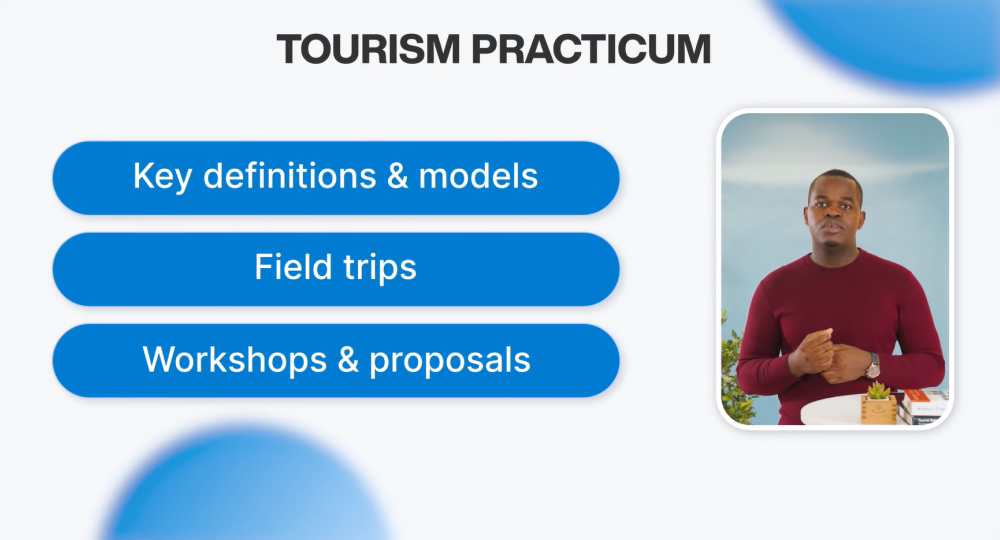
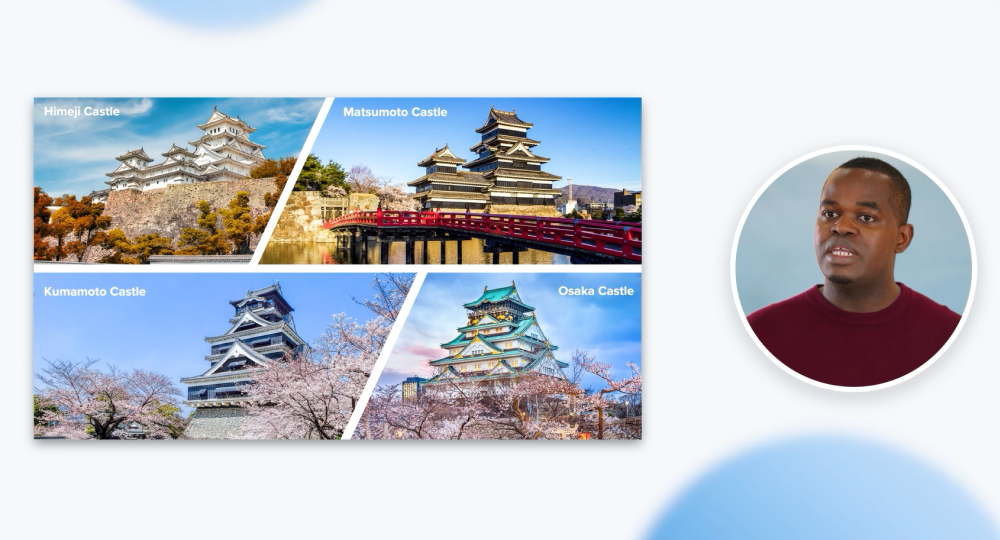
Sign up to watch our mock lecture video and discover how to transform places into meaningful destinations.

ST MOCK LECTURE

Professor Kimo Boukamba

Watch the Video
Select Your Language
CLOSE

Please set your preferred language by selecting the relevant value from the list below.

Unlock Mock Lecture
CLOSE
Loading...

Thank you for registering!
Enjoy this 10-minute video just for you!

PAGE TOP